Book Online
Sculptra Collagen Stimulator Treatments
Sculptra uses poly-L-lactic acid (PLLA) to stimulate your body’s own collagen production, addressing the biological mechanism of volume loss rather than masking it. Results develop gradually over 3 to 6 months and are clinically documented to last two years or more.

 What is Sculptra®?
The Collagen Banking Science Behind Sculptra
Treatment Areas
Are You a Candidate?
What to Expect: The Treatment Experience
Results Timeline
Sculptra vs. Hyaluronic Acid Fillers
Risks and Considerations
Why Choose Cosmetic Enhancement Center of New England + Dr. Maria Atkins, DO
Patient Testimonials
Frequently Asked Questions
Contact Us / Schedule a Consultation
What is Sculptra®?
The Collagen Banking Science Behind Sculptra
Treatment Areas
Are You a Candidate?
What to Expect: The Treatment Experience
Results Timeline
Sculptra vs. Hyaluronic Acid Fillers
Risks and Considerations
Why Choose Cosmetic Enhancement Center of New England + Dr. Maria Atkins, DO
Patient Testimonials
Frequently Asked Questions
Contact Us / Schedule a Consultation


Starting in your mid-thirties, your skin loses roughly one percent of its collagen every year, a slow, steady decline driven by the skin’s own repair system gradually slowing down and producing less structural protein than your body is breaking down. The structural proteins that once gave your face its volume, contour, and resilience are simply being produced more slowly than your body is breaking them down. That imbalance is why the face and body don’t just wrinkle, they deflate, shift, and lose their underlying architecture. What follows that understanding, logically, is a question of precision: not how to mask the loss, but how to address the mechanism producing it.
Hyaluronic acid fillers have been the dominant answer to facial volume loss for more than two decades, and for good reason. Injected directly into targeted areas of the face, HA gels physically displace space and restore projection immediately and can be dissolved if needed, which makes them one of the most controllable options in aesthetic medicine. Large-scale registry data and decades of peer-reviewed outcomes confirm their safety, predictability, and patient satisfaction across a wide range of indications. For the right candidate, in the right anatomical context, they remain a legitimate and well-supported choice.
But replacing lost volume with an injected gel is not the same as restoring the tissue that produced it, and at Cosmetic Enhancement Center of New England, we don’t offer a workaround when a mechanism-level solution exists.
Sculptra works by delivering poly-L-lactic acid (PLLA) microparticles beneath the skin’s surface, where they signal your body to rebuild its own collagen: not filling a deficit, but addressing what’s causing it. Results emerge gradually over three to six months as your body rebuilds the structural matrix that volume loss has depleted.
Patients across Portland, Falmouth, and Waterville choose Cosmetic Enhancement Center of New England for Sculptra because of the depth of clinical expertise behind every treatment plan.
What Is Sculptra?
Sculptra (injectable poly-L-lactic acid, or PLLA) is an FDA-approved collagen stimulator, not a traditional dermal filler. Where hyaluronic acid fillers add immediate physical volume, Sculptra works as a biostimulator, triggering your body’s own fibroblasts to produce new collagen over time.
The FDA first
 Trusted Source
PMA P030050, Sculptra (Injectable Poly-L-Lactic Acid)
U.S. Food and Drug Administration
Go to Source
approved Sculptra
in August 2004 for HIV-associated facial lipoatrophy, making it one of the longest-studied injectable aesthetic treatments available. Approval was
Trusted Source
PMA P030050/S002, Sculptra Aesthetic
U.S. Food and Drug Administration
Go to Source
expanded
in July 2009 to include nasolabial fold contour deficiencies and other facial wrinkles in immune-competent patients, and again in
Trusted Source
PMA P030050/S039, Sculptra Aesthetic (Cheek Indication)
U.S. Food and Drug Administration
Go to Source
April 2023
to cover fine lines and wrinkles in the cheek region, making Sculptra the first and only PLLA collagen stimulator with an FDA-approved cheek indication.
Trusted Source
PMA P030050, Sculptra (Injectable Poly-L-Lactic Acid)
U.S. Food and Drug Administration
Go to Source
approved Sculptra
in August 2004 for HIV-associated facial lipoatrophy, making it one of the longest-studied injectable aesthetic treatments available. Approval was
Trusted Source
PMA P030050/S002, Sculptra Aesthetic
U.S. Food and Drug Administration
Go to Source
expanded
in July 2009 to include nasolabial fold contour deficiencies and other facial wrinkles in immune-competent patients, and again in
Trusted Source
PMA P030050/S039, Sculptra Aesthetic (Cheek Indication)
U.S. Food and Drug Administration
Go to Source
April 2023
to cover fine lines and wrinkles in the cheek region, making Sculptra the first and only PLLA collagen stimulator with an FDA-approved cheek indication.
The active ingredient, PLLA, is a biocompatible, biodegradable synthetic polymer with a well-established safety record in medicine, used in dissolvable sutures and orthopedic implants for decades before its application in aesthetics.
The Collagen Banking Science Behind Sculptra
Sculptra’s mechanism of action is distinct from every other injectable on the market. When PLLA microparticles are injected into the deep dermis, they are recognized by the immune system as a foreign body, triggering a controlled, localized inflammatory response. Your immune system responds to the particles by sending in repair cells. That repair process is what triggers your skin to produce new collagen, specifically the kind responsible for firmness and volume.
Peer-reviewed research published in the
Trusted Source
Poly-L-Lactic Acid (PLLA) Stimulates Collagen Synthesis in Human Dermal Fibroblasts via the p38 MAPK Signaling Pathway
Kim JH et al
Go to Source
Annals of Dermatology
confirmed that PLLA activates a specific biological pathway in skin cells that drives lasting collagen production: not a temporary plumping effect, but actual structural rebuilding at the tissue level.
A 2024 study published in
Trusted Source
RNA Sequencing Reveals Unique Gene Expression Profiles Following Treatment with Poly-L-Lactic Acid vs. Calcium Hydroxylapatite
Waibel JS et al
Go to Source
Dermatologic Surgery
found that Sculptra triggers something other injectables don’t: regeneration of the fat compartments beneath the skin. Those compartments are a key part of what gives a youthful face its volume and shape, and they’re something gel-based fillers can’t restore.
This is what practitioners mean by “collagen banking”: a cumulative, compounding investment in your skin’s structural foundation that continues to pay dividends long after the PLLA microparticles have been fully absorbed.
Sculptra is FDA-approved for facial use and is most commonly applied to:
- Temples: Restoring volume lost to temporal hollowing, one of the earliest and most overlooked signs of facial aging.
- Cheeks and midface: Rebuilding the scaffolding beneath the skin to lift and restore youthful contour.
- Nasolabial folds: Softening the lines that run from the nose to the corners of the mouth.
- Jawline and pre-jowl sulcus: Improving definition and reducing the appearance of jowling.
- Chin: Adding subtle projection and improving lower-face balance.
- Fine lines and wrinkles of the cheek region: Per the 2023 FDA approval, Sculptra is now indicated for superficial textural improvement in this area.
Off-label applications, including the neck, décolletage, hands, and buttocks are performed at the discretion of the provider based on individual anatomy and clinical judgment.

Are You a Candidate?
Sculptra is well-suited for patients who:
- Are experiencing gradual volume loss, hollowing, or deflation in the face or body rather than isolated lines or folds
- Prefer a natural, progressive result over immediate transformation
- Are willing to commit to a multi-session treatment protocol (typically 2–3 sessions spaced 4–6 weeks apart)
- Are not pregnant or breastfeeding
- Have no active skin infections or inflammatory conditions in the treatment area
- Understand that results develop over months, not days
Sculptra is not appropriate for patients seeking immediate correction, those with a history of keloid formation or hypertrophic scarring, or those with known hypersensitivity to any component of the formulation. Your provider will determine whether Sculptra, an HA filler, or a combination approach best serves your anatomy and goals.
What to Expect: The Treatment Experience
Consultation: Your provider conducts a comprehensive facial assessment, reviewing your anatomy, volume loss patterns, skin quality, and aesthetic goals before recommending a treatment plan.
Preparation: Sculptra is reconstituted with sterile water at least 24 hours before injection, a step that improves particle distribution and reduces the risk of nodule formation.
The Injection: Treatment is performed using a fine needle or cannula, with topical anesthetic applied beforehand for comfort. Sessions typically take 30–45 minutes.
Aftercare: Patients follow the “5-5-5 rule”: massage the treated area for 5 minutes, 5 times per day, for 5 days post-treatment. This distributes the PLLA particles evenly and is the single most important factor in minimizing the risk of subcutaneous nodules.
Downtime: Minimal. Swelling and redness are common for 24–72 hours. The immediate post-injection volume is from the water used in reconstitution and will subside within days, before the collagen-building process begins.
Results Timeline
Sculptra’s results are not immediate, and that is by design.
- Weeks 1–4: The PLLA microparticles begin integrating into the tissue. The initial water-based swelling resolves. No visible result yet.
- Months 1–3: Fibroblast activation and early collagen synthesis begin. Subtle improvements in skin quality and firmness may be noticeable.
- Months 3–6: The primary collagen-building phase. Volume, contour, and structural improvement become visible and continue to develop.
- 12–24+ months: Results are fully expressed and clinically documented to persist. A two-year prospective study published in
Trusted Source
Nonsurgical Rejuvenation of the Aging Face with Injectable Poly-L-Lactic Acid for Restoration of Soft Tissue Volume
Schierle CF, Casas LA
Go to Source
Aesthetic Surgery Journal
reported a 99.1% patient satisfaction rate across 106 patients at two-year follow-up. A 2025 volumetric
Trusted Source
Volumetric Outcomes of Injectable Poly-L-Lactic Acid-Suspension for Collagen Stimulation at Two-Year Follow-Up
Authors TBD
Go to Source
study
confirmed measurable soft-tissue formation persisting at two years across all treated patients, with measurable volume gains confirmed per vial.
Most patients require 2–3 treatment sessions to achieve optimal results, with maintenance sessions recommended every 18–24 months thereafter.
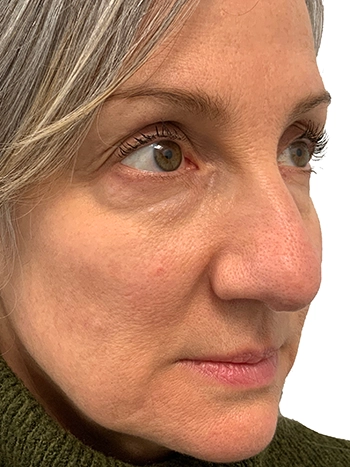
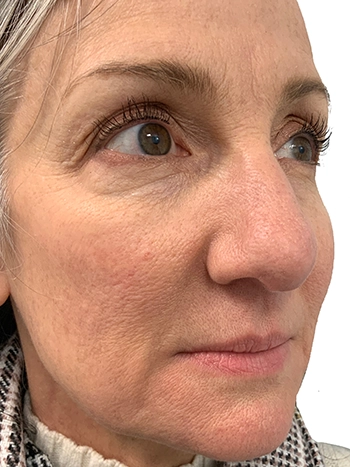
Sculptra® Patient
Sculptra
The patient was 58 years old at the time of treatment.
The patient received 3 Sculptra treatments over the course of 5 months to her cheeks and tear trough areas.
The after photo were taken approximately 4 months after her 3rd treatment.
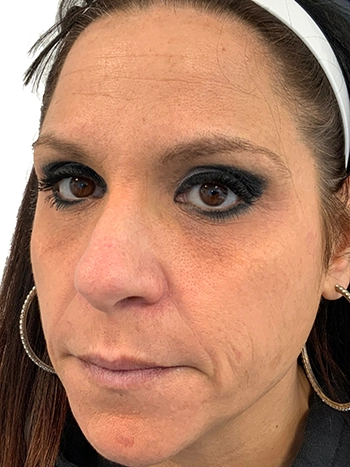
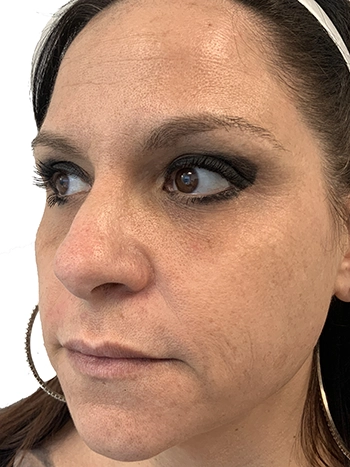
Sculptra® Patient
Sculptra
The patient was 43 years old at the time of treatment.
The patient received 1 Sculptra treatment to her cheeks.
The after photos were taken approximately 2 months after treatment.
Sculptra® Patient
Combination Treatments – Injectables and MicroneedlingRF
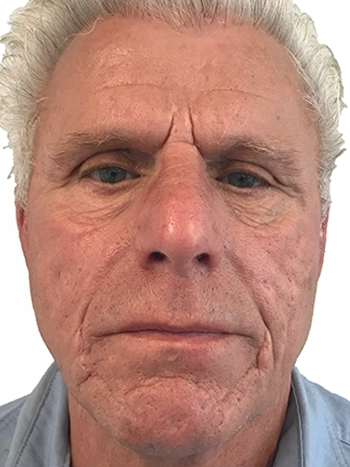
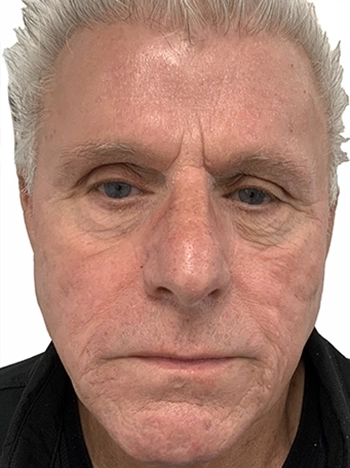
72 year old male patient who received multiple treatments consisting of dermal fillers, Botox, and VirtueRF treatments on his face and neck. After photo taken approximately two years after his initial treatment.
Sculptra vs. Hyaluronic Acid Fillers
| Sculptra (PLLA) | HA Fillers | |
|---|---|---|
| Mechanism | Stimulates your own collagen | Adds physical gel volume |
| Onset | Gradual (3–6 months) | Immediate |
| Duration | 2+ years | 6–18 months |
| Reversibility | Not reversible | Reversible with hyaluronidase |
| Sessions needed | 2–3 (spaced 4–6 weeks) | Usually 1 |
| Best for | Diffuse volume loss, structural rebuilding | Targeted lines, lips, acute correction |
| Tissue-level effect | Rebuilds collagen and restores fat compartments | Temporarily fills space only |
Many patients benefit from a combination approach, using Sculptra for structural foundation and HA fillers for targeted refinement. Your provider will recommend the protocol that best serves your anatomy.
Risks and Considerations
Sculptra has a well-established safety profile across more than two decades of clinical use. As with any injectable treatment, risks exist and should be understood before proceeding.
Common side effects include injection-site swelling, bruising, redness, and tenderness, typically resolving within days.
Subcutaneous nodules are the most discussed risk specific to PLLA. The Schierle and Casas 2011 prospective
Trusted Source
Nonsurgical Rejuvenation of the Aging Face with Injectable Poly-L-Lactic Acid for Restoration of Soft Tissue Volume
Schierle CF, Casas LA
Go to Source
study
reported a nodule rate of 4.7% across 106 patients at two-year follow-up. The majority of nodules are small, non-visible, and palpable only. Risk is significantly reduced by proper reconstitution technique, appropriate injection depth, and strict adherence to the post-treatment massage protocol.
Rare risks include infection, disruption to blood flow in the treatment area, and localized inflammatory reactions. These risks are minimized by choosing an experienced, medically trained injector with deep anatomical knowledge.
At Cosmetic Enhancement Center of New England, our providers bring a background in biochemistry and 30+ years of aesthetic medicine experience to every injection decision, from product selection to technique to aftercare protocol.
Why Choose Cosmetic Enhancement Center of New England

Practice
- 32,000+ Patients Treated
- 150,000+ BOTOX Injections
- 30+ Years in Practice
- Active medical licenses in Maine and Florida
- CareCredit financing accepted
Our Providers
- Maria Atkins DO | Owner and Medical Director
- Fellow, American Society for Laser Medicine and Surgery
- BS Biochemistry, University of Illinois
- Chicago College of Osteopathic Medicine (1993)
Maria Atkins, DO founded Cosmetic Enhancement Center of New England with a commitment to evidence-based aesthetic medicine that has defined the practice for more than three decades. Her undergraduate training in biochemistry at the University of Illinois gave her a molecular-level understanding of how the skin ages and responds to treatment, a foundation she built on through her Doctor of Osteopathic Medicine degree from Chicago College of Osteopathic Medicine (1993), internship at Rush Presbyterian-St. Luke’s Medical Center in Chicago, and Family Practice residency at Brighton Medical Center in Portland, Maine.
Dr. Atkins’ fellowship with the American Society for Laser Medicine and Surgery reflects her commitment to the highest standards of training in energy-based and injectable aesthetics. ASLMS Fellows are required to demonstrate advanced clinical competency and ongoing education, not simply attendance at a course.
For Sculptra specifically, that background in biochemistry is directly relevant. Understanding the p38 MAPK signaling pathway, fibroblast activation kinetics, and the role of adipose compartment restoration in facial aging is not incidental to good Sculptra outcomes. It is the foundation of them. Every Sculptra protocol at Cosmetic Enhancement Center of New England is designed around your specific anatomy, volume loss pattern, and long-term aesthetic goals.
Cosmetic Enhancement Center of New England has served patients across Portland, Falmouth, Waterville, and southern New Hampshire since 1989, with a clinical philosophy centered on natural results, patient education, and treatments grounded in peer-reviewed science.
Explore related services: BOTOX, Dermal Fillers, Microneedling.



Frequently Asked Questions
How many Sculptra sessions will I need?
Most patients require 2–3 sessions spaced 4–6 weeks apart to achieve optimal results. The exact number depends on the degree of volume loss, the treatment areas, and your individual collagen response. Your provider will outline a personalized protocol during your consultation.
When will I see results from Sculptra?
Results develop gradually over 3–6 months as your body produces new collagen. The initial post-injection swelling (from the water used in reconstitution) resolves within days and is not representative of your final result. Most patients notice meaningful improvement by months 3–4, with full results visible by month 6.
How long does Sculptra last?
Clinical studies document results lasting two years or more. A 2025 volumetric study confirmed measurable soft-tissue formation persisting at two years across all treated patients. Maintenance sessions every 18–24 months are recommended to sustain results.
Is Sculptra safe?
Sculptra has been FDA-approved since 2004 and has an extensive clinical safety record. The most discussed risk is subcutaneous nodule formation, reported at approximately 4.7% in long-term prospective studies. This risk is significantly reduced by proper technique, appropriate reconstitution, and adherence to the post-treatment massage protocol.
Can Sculptra be combined with other treatments?
Yes. Sculptra is frequently combined with HA fillers for targeted refinement, BOTOX for dynamic lines, and energy-based treatments such as laser resurfacing or microneedling for skin quality. Your provider will recommend a combination protocol if appropriate for your goals.
How much does Sculptra cost?
Sculptra is priced per vial, and the number of vials required varies by patient. Cosmetic Enhancement Center of New England offers CareCredit financing to make treatment accessible. Contact us for current pricing and to discuss your personalized treatment plan.
Does Sculptra hurt?
Discomfort is minimal. Topical anesthetic is applied before treatment, and the injections themselves are brief. Most patients describe a mild pressure sensation. Post-treatment soreness is common for 24–48 hours.
What is the “5-5-5 rule” for Sculptra aftercare?
After each Sculptra session, patients are instructed to massage the treated area for 5 minutes, 5 times per day, for 5 days. This distributes the PLLA particles evenly and is the most important step in minimizing nodule risk.
Lift. Smooth. Customize.✨
Spend $2,000 or more on skin tightening and choose your choice of Tox (Botox, Daxxify,…

Muscle Mondays💪
Buy One, Get One FREE on all muscle‑contouring treatments: Emsculpt Neo • CoolTone • Emsella…

Happy Birthday!
Birthday Discount: 20% off ONE treatment OR product Disclaimer: Discount can be used 30 days…
Schedule Your Sculptra Consultation in Portland, Falmouth, or Waterville, ME
If you’re ready to address volume loss at the source, not just mask it, Sculptra may be the right solution for your anatomy and goals. Cosmetic Enhancement Center of New England serves patients throughout Portland, Falmouth, Waterville, and southern New Hampshire with evidence-based aesthetic medicine and a clinical philosophy built on natural, lasting results.
The providers at Cosmetic Enhancement Center of New England will conduct a comprehensive consultation to evaluate your anatomy, discuss your goals, and determine whether Sculptra, a combination approach, or an alternative treatment is the right fit for you.
"*" indicates required fields
 Follow us on Instagram @cecofne
1 Schierle CF, Casas LA. “Nonsurgical Rejuvenation of the Aging Face with Injectable Poly-L-Lactic Acid for Restoration of Soft Tissue Volume.” Aesthetic Surgery Journal. 2011;31(1):95–109. https://doi.org/10.1177/1090820X10391213
2 Kim JH, et al. “Poly-L-Lactic Acid (PLLA) Stimulates Collagen Synthesis in Human Dermal Fibroblasts via the p38 MAPK Signaling Pathway.” Annals of Dermatology. 2019. PMC7992693. https://pmc.ncbi.nlm.nih.gov/articles/PMC7992693/
3 Waibel JS, et al. “RNA Sequencing Reveals Unique Gene Expression Profiles Following Treatment with Poly-L-Lactic Acid vs. Calcium Hydroxylapatite.” Dermatologic Surgery. 2024. PMID 39480040. https://doi.org/10.1097/DSS.0000000000004425
4 U.S. Food and Drug Administration. PMA P030050, Sculptra (Injectable Poly-L-Lactic Acid). Approval Date: August 3, 2004. https://www.accessdata.fda.gov/cdrh_docs/pdf3/P030050a.pdf
5 U.S. Food and Drug Administration. PMA P030050/S002, Sculptra Aesthetic. Approval Date: July 28, 2009. https://www.accessdata.fda.gov/cdrh_docs/pdf3/P030050S002a.pdf
6 U.S. Food and Drug Administration. PMA P030050/S039, Sculptra Aesthetic (Cheek Indication). Approval Date: April 25, 2023. https://www.accessdata.fda.gov/cdrh_docs/pdf3/P030050S039a.pdf
7 [Authors TBD]. “Volumetric Outcomes of Injectable Poly-L-Lactic Acid-Suspension for Collagen Stimulation at Two-Year Follow-Up.” Clinical, Cosmetic and Investigational Dermatology. 2025. PMID 41488550. PMC12764296. https://pubmed.ncbi.nlm.nih.gov/41488550/
This content has been authored or reviewed and approved by Maria Atkins, DO, or her staff.